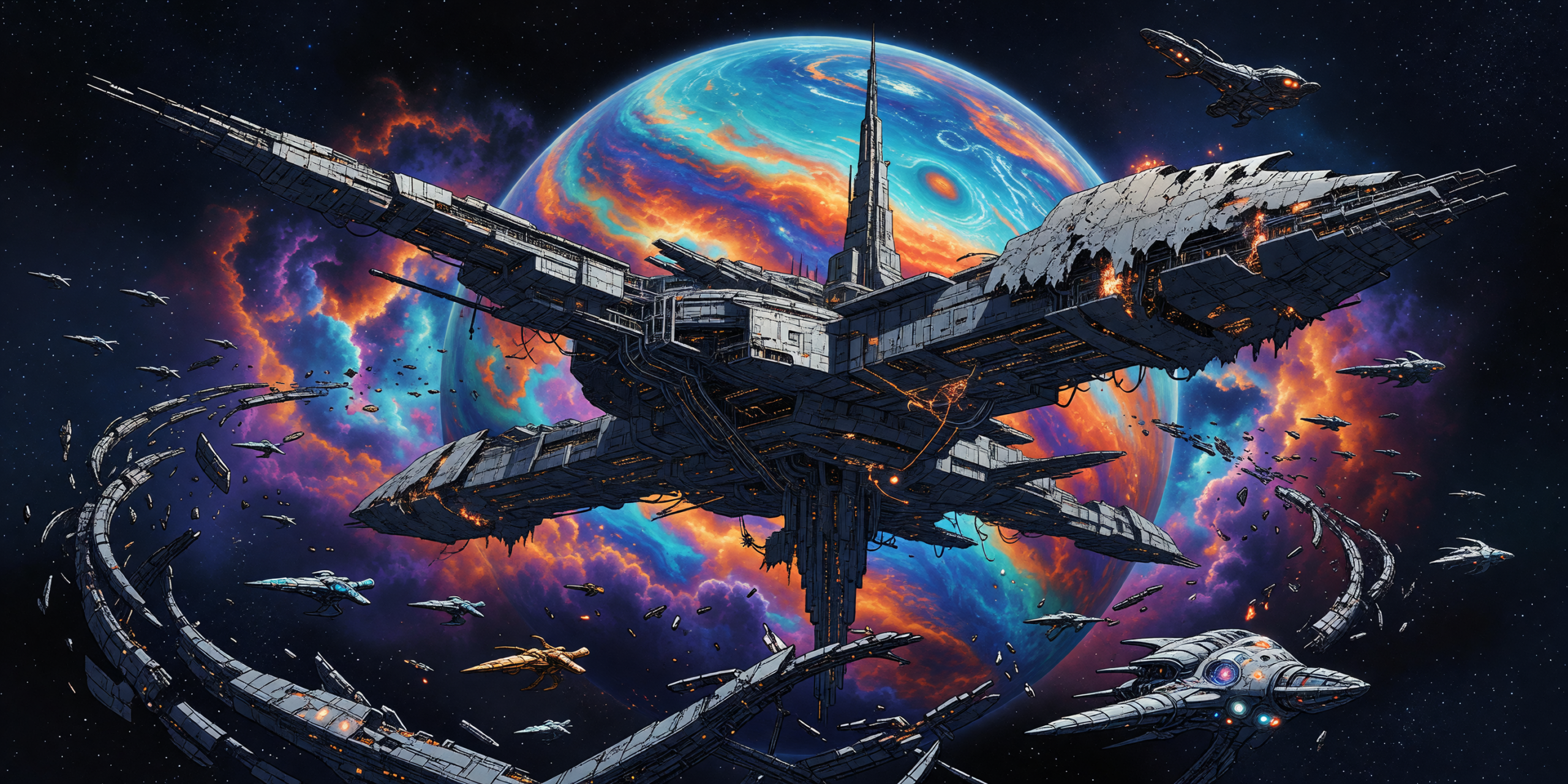
Paizo has initiated the public playtest for Starfinder Second Edition, their sci-fi counterpart to Pathfinder, with a developer video detailing sweeping lore revisions—including the dramatic fate of Absalom Station—and expanded player options. Weekly playtest packets will roll out through 2025, culminating in a full release next year. This structured approach mirrors Paizo’s successful Pathfinder 2E playtest, which refined a ruleset now renowned for its mathematical precision in combat and balance.
Lore Shifts and Mechanical Foundations
The video reveals Absalom Station’s transformation amid cosmic upheaval, reshaping the Pact Worlds setting with new threats and opportunities. These changes aren’t mere flavor; they integrate directly into mechanics, offering fresh ancestries, classes, and gear akin to how Pathfinder 2E‘s ancestry-heritage framework elegantly scales power levels. Playtest packets will cover core rules, followed by character options, spells, and equipment, allowing iterative feedback on Starfinder’s hybrid sci-fi/fantasy systems.
From a design perspective, this evolution addresses Starfinder 1E‘s bloat—heavy hybridization rules and future-proofing assumptions that aged poorly. Paizo’s modular packet releases enable targeted testing, much like Blades in the Dark‘s crewplay loops refined position/effect dynamics through community input. Having implemented similar iterative systems in my developer days, I appreciate the engineering here: weekly drops prevent overload while building comprehensive data.
Player Options and Playtest Rigor
New player options emphasize drift tech, mechs, and interstellar intrigue, with streamlined action economy promising tighter turns than 1E’s often sluggish starship combat. Expect comparisons to Lancer‘s mech customization, but grounded in d20 familiarity. The schedule—core rulebook first, then expansions—ensures foundational balance before layering complexity.
This playtest signals Paizo’s commitment to data-driven design, leveraging tools from Pathfinder 2E‘s telemetry to quantify fun and fairness. For TTRPGs, it means a more accessible sci-fi engine, potentially drawing lapsed players back with polished drift toward modernity.